
Lake Martin Timeline
The below timeline celebrates a century of transformation around Lake Martin, beginning with the construction of Martin Dam in the early 1920s. Each milestone highlights how the lake has shaped communities around Lake Martin and become a beloved destination for families across the Southeast.
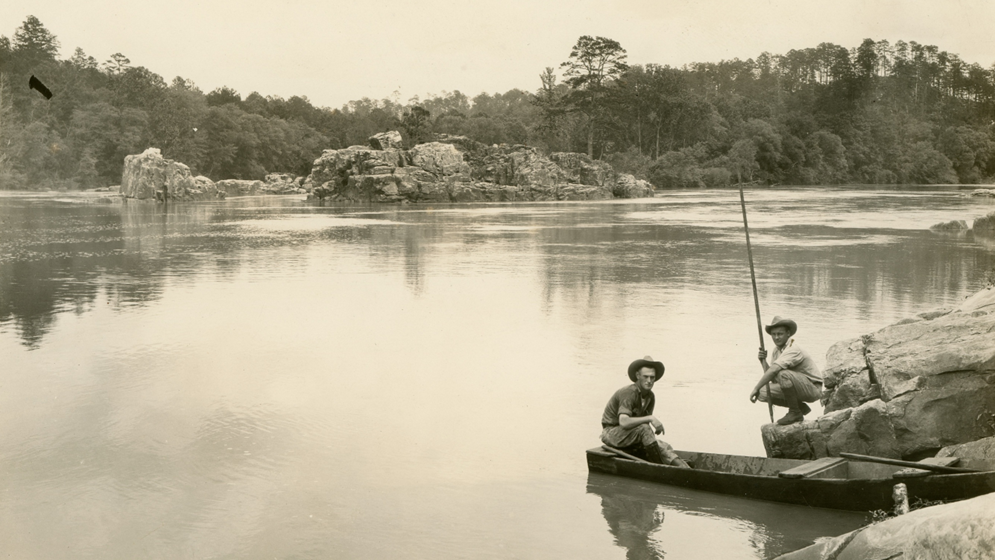
By the early 1900s, Cherokee Bluffs stood as a celebrated landmark in Tallapoosa County. Travelers from across the region spoke of its striking beauty, describing the cliffs and surrounding landscape as a place whose quiet grandeur rewarded every journey. The Cherokee Bluffs site was named for Cherokee Indians who had come to Alabama during the Creek Indian Wars and remained following the Creek’s defeat.
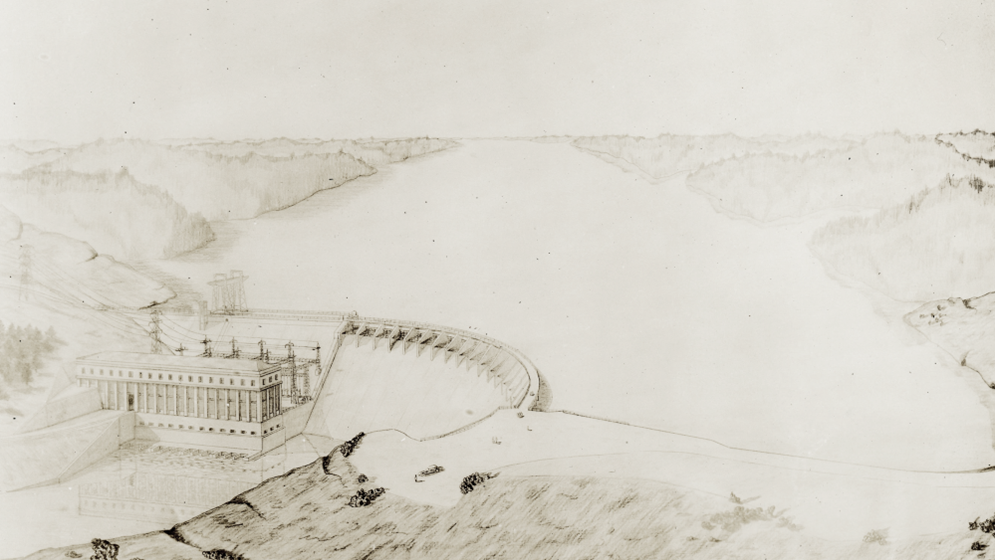
By 1912, with an increase interest in hydroelectric generation, there were six groups of entrepreneurs pursuing the right to build a dam at Cherokee Bluffs. James Mitchell, an engineer with financial ties to London, and Thomas Martin, an attorney from Montgomery, envisioned an integrated electrical system across the state and at the heart of that vision was Cherokee Bluffs. The two were able to gain funding to purchase small utilities around Alabama, including Alabama Power Company, a small company based out of Gadsden that was started in 1906 by William Patrick Lay.
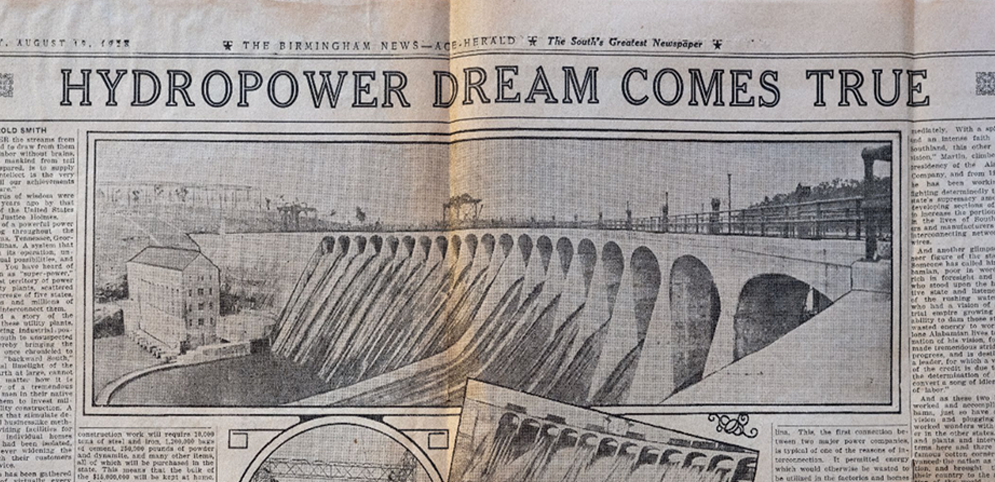
After a decade of challenges acquiring the rights to build the dam, in 1922 Alabama Power, under Thomas Martin’s leadership, was issued preliminary permits by The Federal Power Commission to develop the Tallapoosa River. The license for Cherokee Bluffs was granted on June 9, 1923 and construction began on July 24, 1923. The plant proposed would generate more horsepower than Alabama Power’s two previous projects, Mitchell Dam and Lay Dam, and construction would cost as much as ten million dollars. It was also made known to the public that the dam would flood some 40,000 acres, an area over 3 times the size of Mitchell Lake and the Lay Dam reservoir combined, and create the largest body of water in the state.
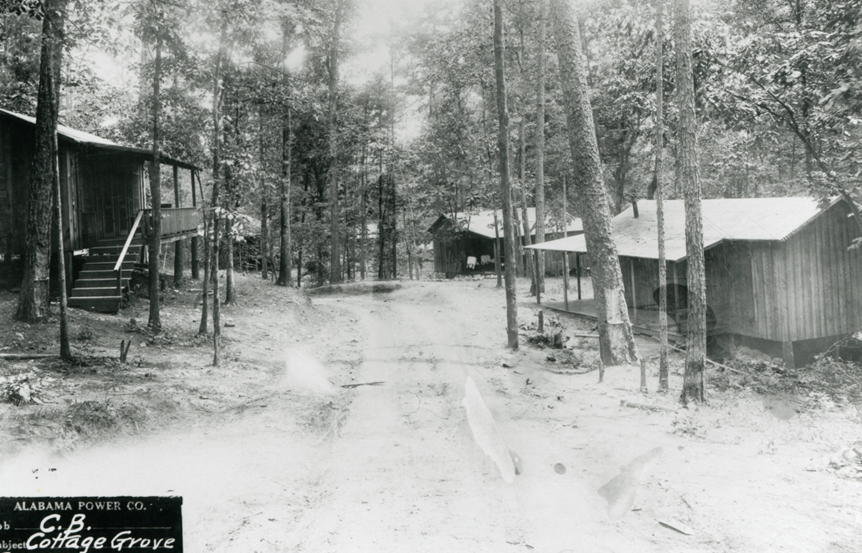
Construction began by developing a village for the construction workers. The village, known as the “city of Cherokee Bluffs” contained 332 structures and a population of approximately 3,000, making it the largest city in the Tallapoosa Valley. After the construction of the dam was finished, the village was converted for use by the Alabama Power workers who operated the dam. The remoteness of the site required a larger commissary, more organized leisure activities, and more entertainment for the workers. The village contained various housing, an amusement hall, a two room school, a church, pool hall, two mess halls, bakery and ice plant, barber shop, shoe shop, and a garage. The streets and buildings were of course, lit by electricity.
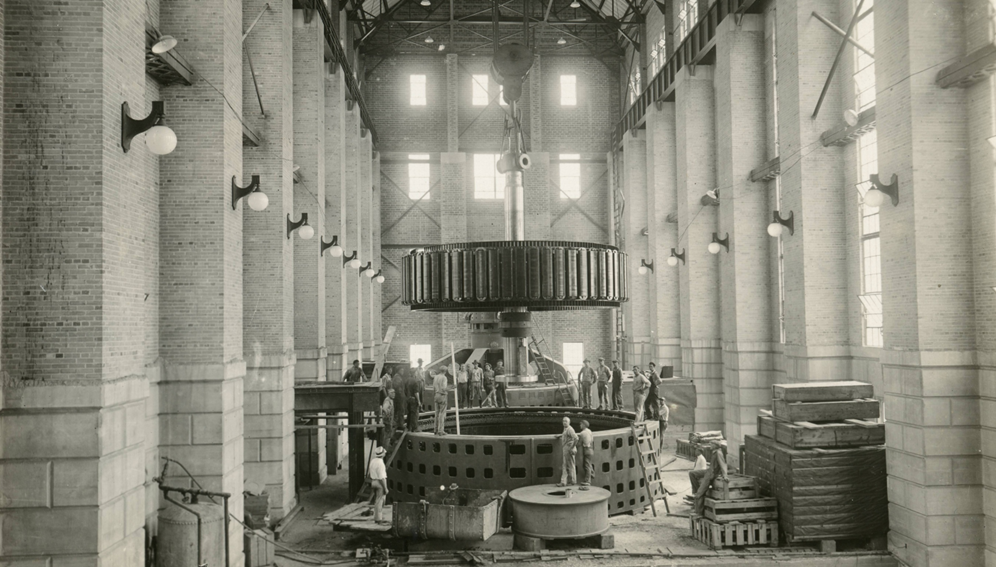
Martin Dam was the flagship of the Alabama Power hydroelectric system, with the dam and powerhouse beautifully constructed, and able to produce an enormous amount of electricity. The 168-foot dam was the highest in the state in 1926. The pressure created from the height of the dam and the force of the water, led the engineers, to design a pool at the base of 12 of the spillway gates to break up the energy before the water continues downstream.
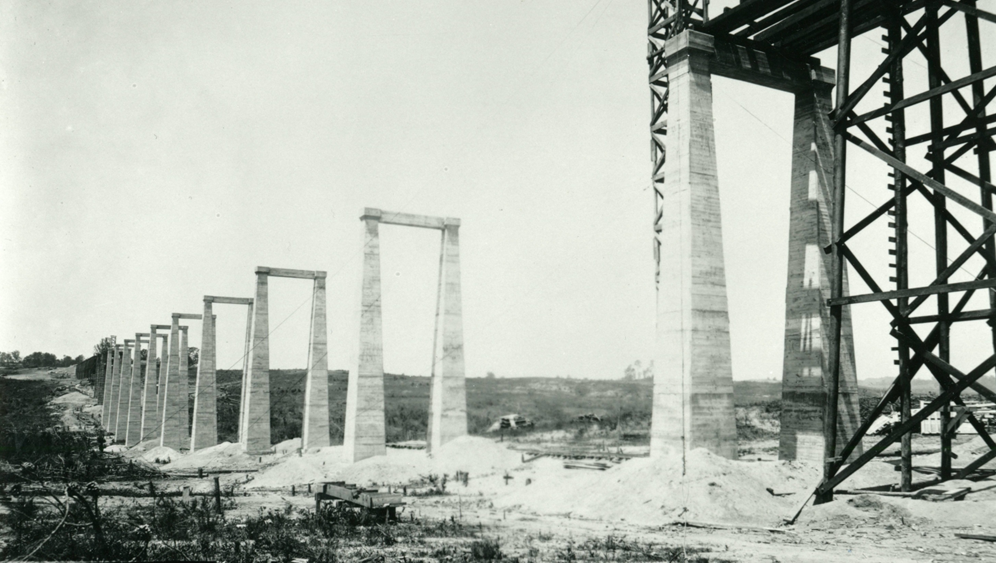
There was one logistical hurdle during construction that had to be ironed out: the Kowaliga Creek Bridge. There was concern from the beginning by local officials regarding the lake’s impact on local transportation due to over a hundred miles of roads going under water. After a lot of back and forth with officials and community members, Alabama Power agreed to build a modern highway bridge of a permanent nature across the wide expanse of water that was once Kowaliga Creek. Construction on this endeavor did not begin until November of 1925 and with rainy season approaching and 7 months left before the dam was completed, the crew was up against the clock. All in all they made it in time, the bridge opening in August of 1926. The project cost nearly 3 quarters of a million dollars to complete.
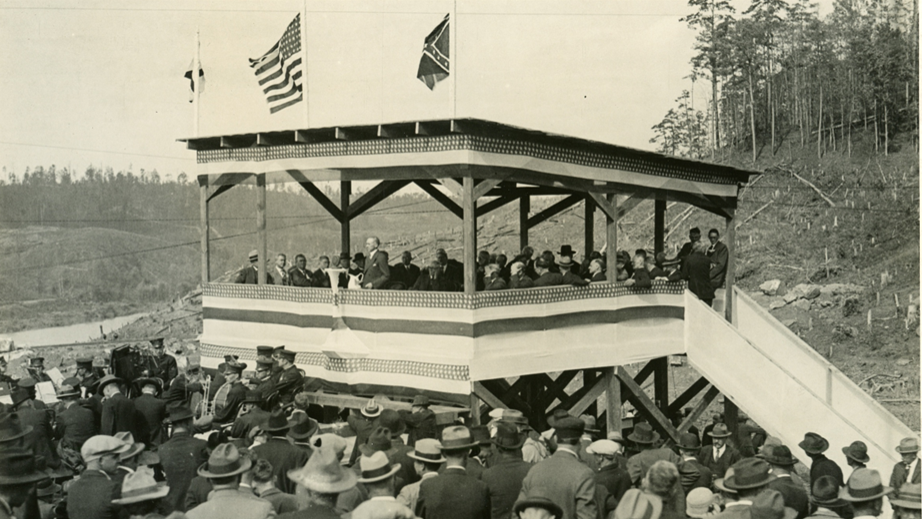
On November 7, 1925, Alabama Power hosted a celebration to commemorate the laying of the cornerstone at the dam site. Nearly 3000 guests attended, ranging from locals to Governor William Brandon. Alabama Power president Thomas Martin gave a speech and in it, he outlined his personal philosophy was also that of Alabama Power, stating: “The continued progress of our state consists in lifting the burdens of drudgery from the shoulders of man to the tireless shoulders of the dynamo. Every loafing stream is loafing at the public expense and every kilowatt of power means less work for someone, more freedom and a richer chance for life.” About 7 months following this auspicious speech, a week after the gates were closed, the board of directors at Alabama Power resolved that the dam at Cherokee Bluffs be named and designated “Martin Dam” and that the great body of water to be formed thereby be named and designated “Lake Martin.”
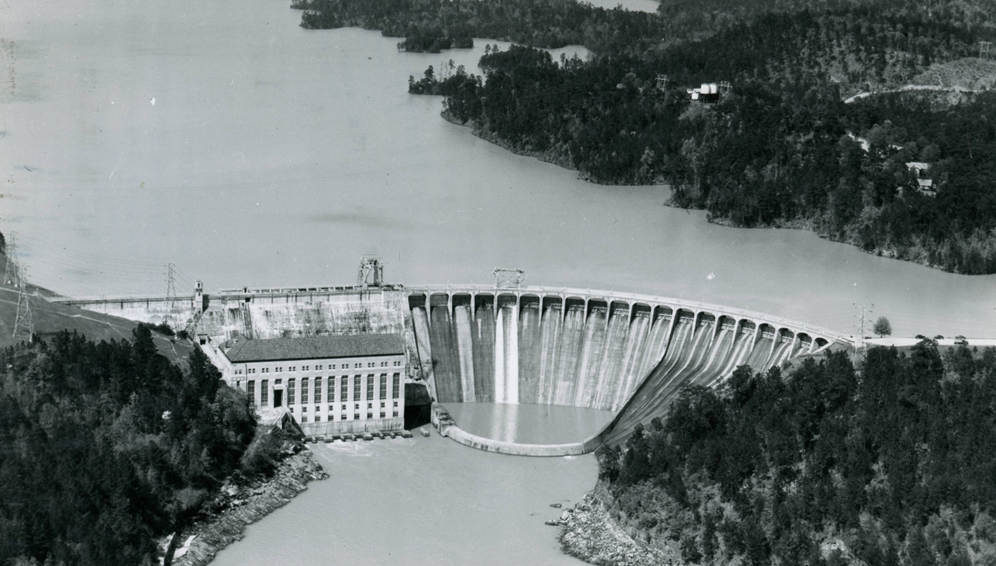
And so it came to be that on December 31, 1926, Martin Dam and Lake Martin progressed from dreams and visions to operational excellence that would forever change the state of Alabama.